
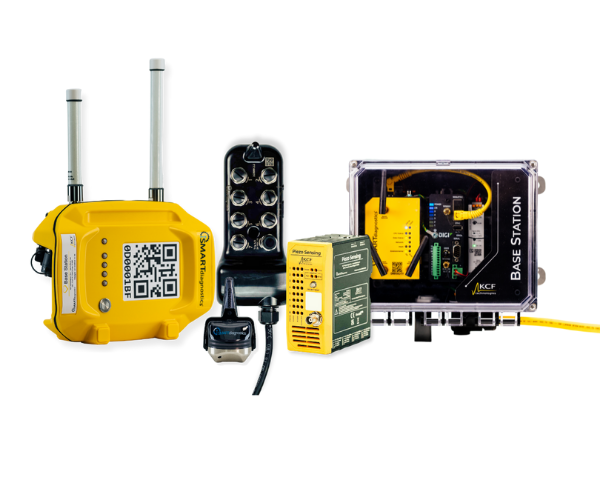
 Many predictive maintenance companies assert that their proprietary sensor is suitable for all equipment, applications, and fault types. This assertion is analogous to claiming that an adjustable wrench suffices for all maintenance tasks. Even the highest quality adjustable wrench cannot replace a socket wrench in situations where the latter is more appropriate. Companies may make such claims about their sensor capabilities because developing specialized hardware for diverse applications is both costly and time-consuming, requiring significant expertise and resources.
For instance, a 2.5-inch tall, adhesively mounted, MEMS-based vibration sensor is unsuitable for monitoring a slow-speed lime kiln support bearing, a 20,000-horsepower recirculation pump with fluid film bearings, or a vertical lift in an automotive plant. Instead, a high-sensitivity wired piezoelectric sensor is necessary for the lime kiln, while the recirculation pump requires both Motor Current Signature Analysis (MCSA) and vibration monitoring due to the predominance of electrical faults. Monitoring the brake on the lift necessitates a programmable logic controller (PLC)-initiated triggered acquisition. When evaluating predictive maintenance vendors, it’s critical to consider their ability to scale your system across plant equipment. Without the ability to scale, companies cannot move past monitoring standard rotating equipment.
An effective predictive maintenance platform incorporates a variety of sensing technologies, such as vibration, extreme temperature sensing (greater than 500°F), Motor Current Signature Analysis (MCSA), oil quality assessment, piezoelectric sensors for slow-speed applications, triggered and PLC-synchronized acquisition, ultrasonic, infrared, and motion amplification. Caution is warranted when a predictive maintenance provider claims to offer a universal solution, as this may result in the inappropriate application of technology.