
 How Silicon Valley Funding Shapes Predictive Maintenance
When evaluating predictive maintenance solutions, companies typically assess factors such as failure detection capability, return on investment, and usability. However, they seldom consider the source of their provider’s funding. Understanding this aspect is critical for anticipating long-term support beyond the initial trial or pilot phase. Before purchasing a predictive maintenance solution, it is essential to examine the company’s funding sources and ownership structure. These factors influence the company’s motives, behavior, and the level of support clients can expect over time. Given the extensive marketing surrounding predictive maintenance, it’s sometimes difficult to cut through all the noise and understand how a company will engage with your plant after a pilot.
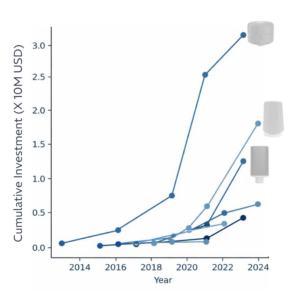
One method to assess a company’s funding is to search or query an LLM like ChatGPT or Claude with: “How is company XYZ funded?” If the response lists numerous investment firms, it is important to recognize that these investors typically expect a 3-10X return on their investment. Ultimately, this cost is passed down to the customer. If the company performs well, both parties benefit; however, if performance falters, the company may recoup costs by reducing services, cutting customer support, imposing significant price increases, or other measures. Considering that approximately 50% of technology startups fail to survive beyond five years, this represents a significant risk.
If predictive maintenance were analogous to selling lawn mowers, these considerations might be less critical. However, predictive maintenance is inherently complex, requiring focus on a limited set of actions that produce the most effective outcomes. It also demands balancing preventive maintenance with urgent repairs and deciding when to perform in-depth machine analyses versus immediate fixes. Given that maintenance budgets are already strained and teams overburdened, additional work orders generated by predictive maintenance tools are unlikely to address these complex challenges effectively.
This challenging reality is frequently overlooked by many predictive maintenance companies, especially those seeking to emulate major technology firms such as Google. These companies generally concentrate on three primary functions: early failure detection, basic diagnosis and recommendations, and notifying maintenance teams or generating work requests. Their hardware, software, analytics, and services teams focus exclusively on these tasks because they are straightforward, well-defined, and cost-effective. Although these companies perform well during pilot phases where value is easily demonstrated, they often reduce resource allocation during scaling to minimize costs. Their simplified perspective of the manufacturing industry helps frame future opportunities favorably for investors. Consequently, they position themselves as industry leaders and invest heavily in marketing to support this image.
Ultimately, the decision to partner with any predictive maintenance provider, regardless of their funding source, should be rooted in a clear-eyed understanding of their long-term incentives and the implications for your operations. By taking a thoughtful, informed approach, you can separate marketing from reality and select a solution that truly aligns with your plant’s needs.